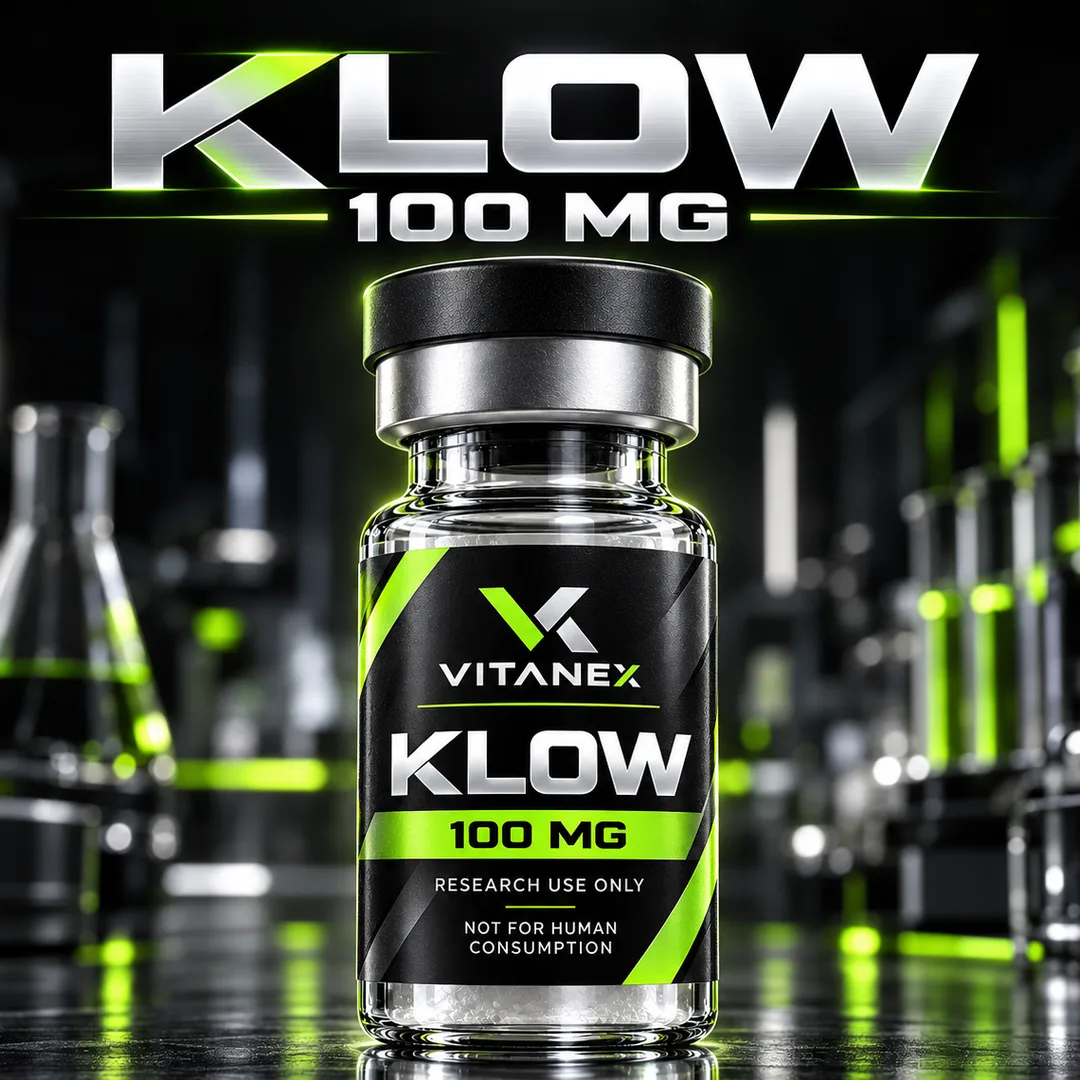
100 mg
KLOW
Blend of GHK-Cu, BPC-157, TB-500 and KPV. Studies on the individual components do not evaluate the blend.
For research use only
Research blend of BPC-157 and TB-500, two peptides studied in preclinical models of tissue repair, tendon healing and wound healing.
Composition: BPC-157 · TB-500
Preclinical research on individual components.
These studies do not evaluate the Wolverine blend.
Wolverine combines two of the most studied peptides in preclinical recovery research: BPC-157, a synthetic pentadecapeptide based on a gastric protein sequence, and TB-500, a fragment related to thymosin beta-4.
BPC-157 has been studied in tendon healing models in rats, and thymosin beta-4 in wound healing, cell migration and angiogenesis. The blend as a whole has not been evaluated in published studies; the references below relate to the individual components.
Supplied as a vial for laboratory research.
Gastric pentadecapeptide BPC 157 accelerates healing of transected rat Achilles tendon and in vitro stimulates tendocytes growth
J Orthop Res, 2003 · PMID 14554208
View on PubMedThymosin beta4 accelerates wound healing
J Invest Dermatol, 1999 · PMID 10469335
View on PubMed100 mg
Blend of GHK-Cu, BPC-157, TB-500 and KPV. Studies on the individual components do not evaluate the blend.
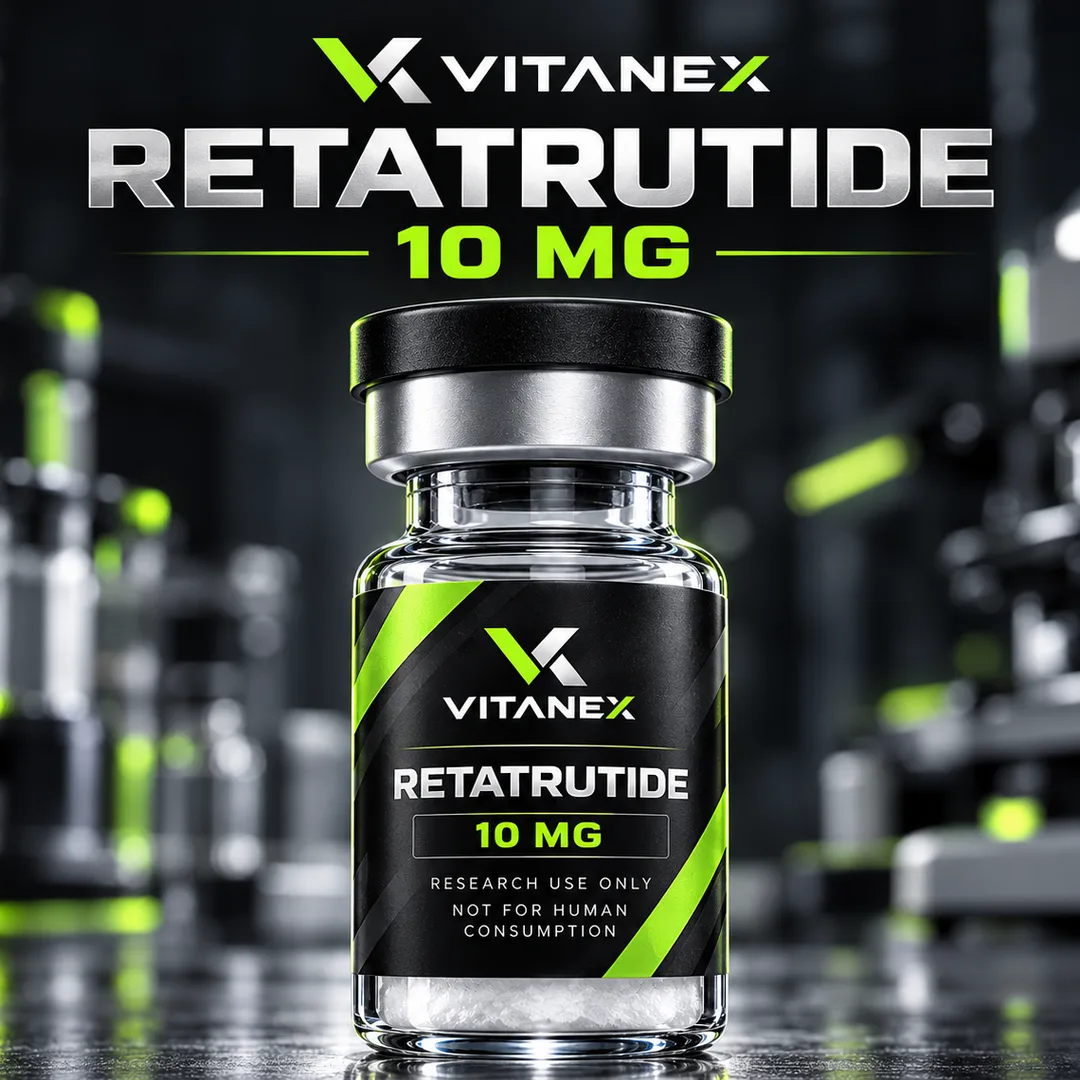
10 mg · 20 mg · 30 mg · 50 mg
Investigational peptide targeting GIP, GLP-1 and glucagon receptors. Studied in clinical trials on body weight and glycemic control.
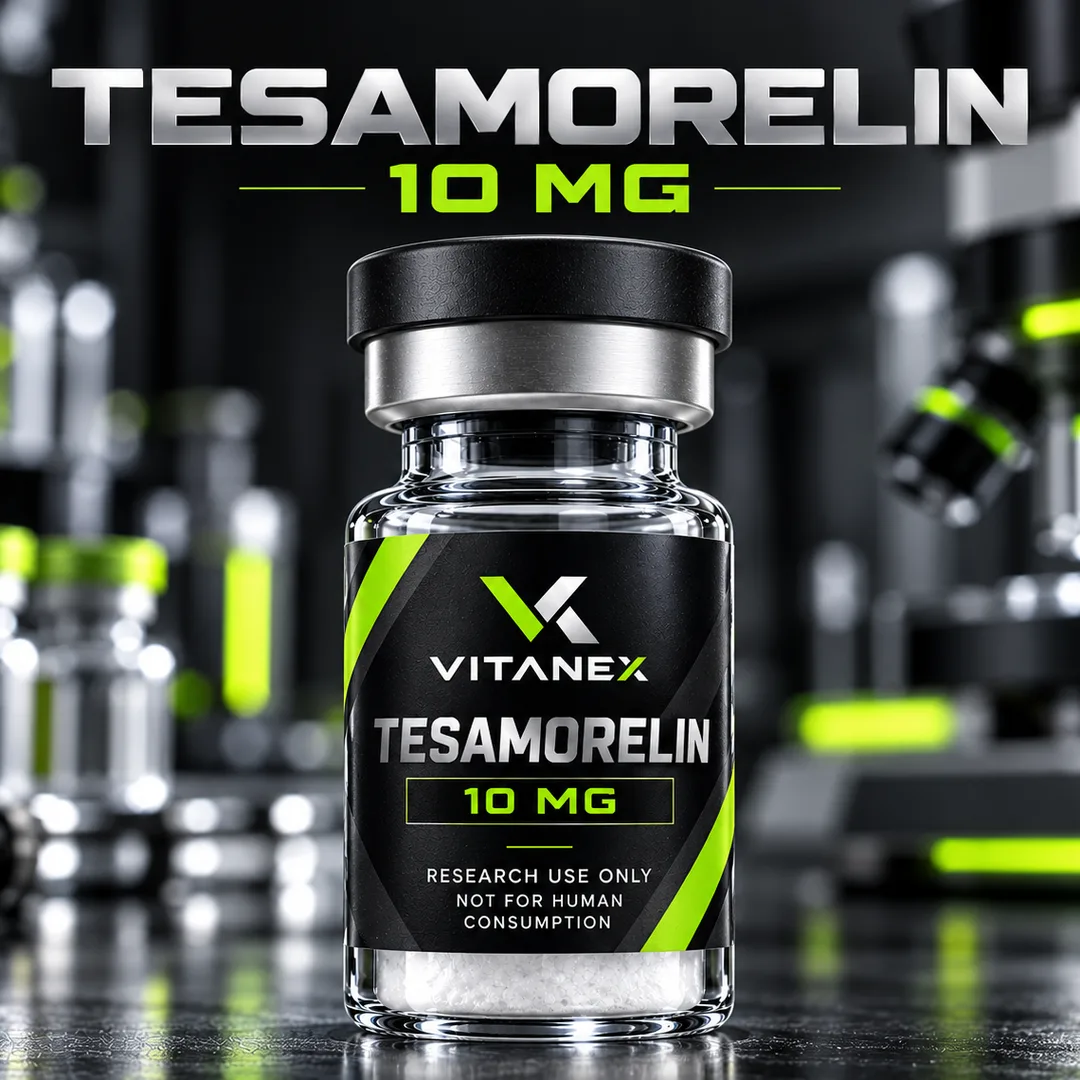
10 mg · 20 mg
GHRH analog studied in GH/IGF-1 signaling and visceral fat, including trials in people with HIV and altered fat distribution.
Out of stock
100 mg
Blend of GHK-Cu, BPC-157, TB-500 and KPV. Studies on the individual components do not evaluate the blend.
10 mg · 20 mg · 30 mg · 50 mg
Investigational peptide targeting GIP, GLP-1 and glucagon receptors. Studied in clinical trials on body weight and glycemic control.
10 mg · 20 mg
GHRH analog studied in GH/IGF-1 signaling and visceral fat, including trials in people with HIV and altered fat distribution.